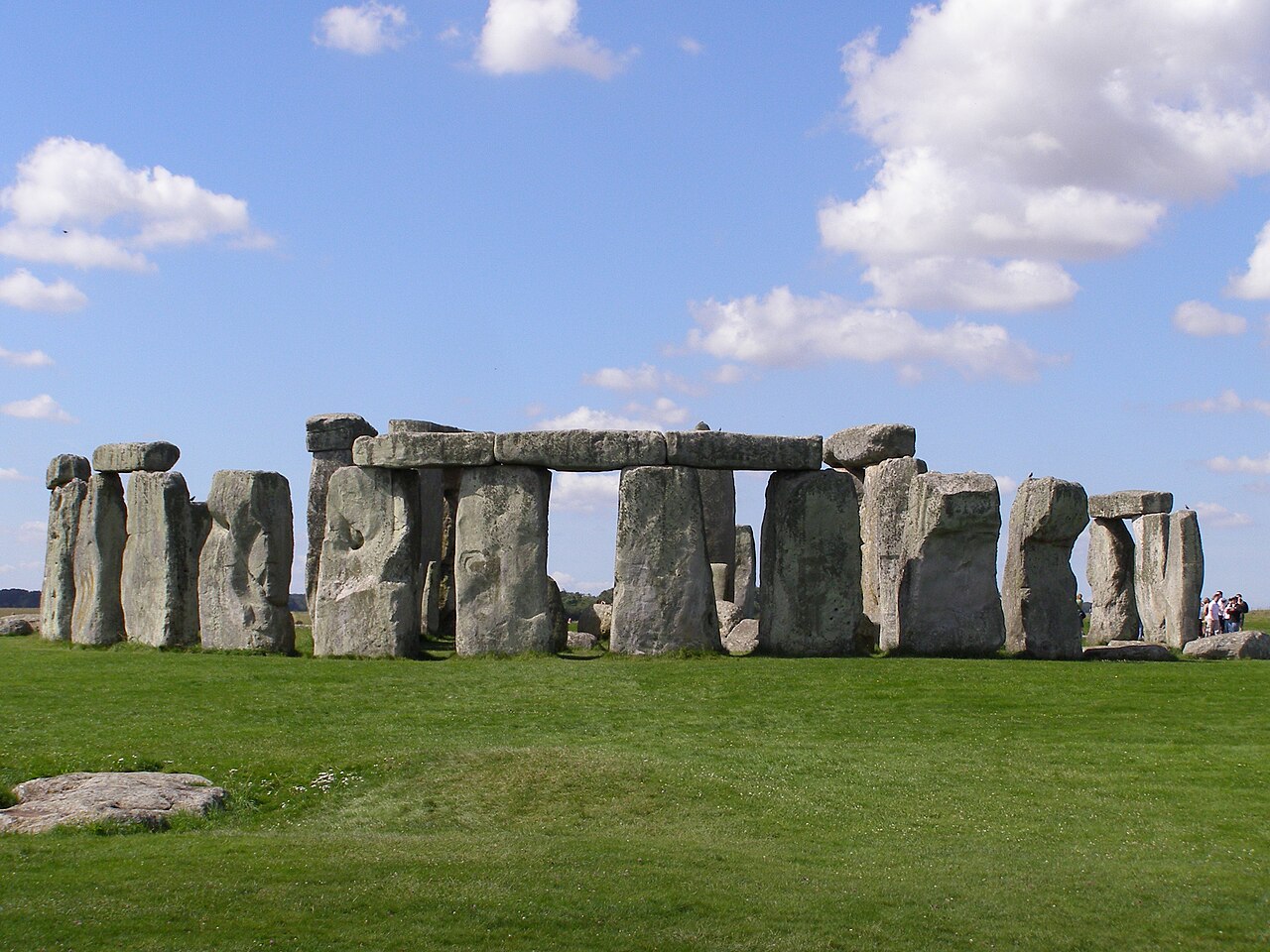
Nestled amidst the sprawling fields of southern England, the monolithic marvel of Stonehenge stands as an enduring testament to the ingenuity and mystery of our ancient ancestors. This iconic stone circle, prominently positioned on Salisbury Plain, invites endless speculation and fascination. For over 4,600 years, this prehistoric monument has challenged historians, archaeologists, and curious minds alike to unravel its secrets. Who were the visionary builders who meticulously crafted this colossal structure without modern tools? What profound purposes did it serve? And how did its construction shape the early history of the region?
Diving into the rich tapestry of Stonehenge's Salisbury history means embarking on a journey through millennia, piecing together clues left by a civilization that left no written records. This article aims to explore the deep past of this enigmatic site, from its mythical origins to modern scientific theories, offering a comprehensive look at one of the world's most compelling archaeological puzzles.
The Enduring Enigma: A Glimpse into Stonehenge's Ancient Past
Stonehenge's status as one of the world’s greatest enigmas is well-earned. The sheer scale and precision of the monument, coupled with the complete absence of written accounts from its creators, have fueled centuries of speculation. Long before modern archaeology, folklore and legend attempted to explain its impossible existence.
One popular tale credits Merlin, the legendary wizard of Arthurian lore, with magically transporting the colossal stones from Ireland. Another whispers of invading Danes erecting the monument, while some theorized it was the ruins of a Roman temple, despite its vastly older origins. These ancient myths highlight humanity's innate desire to comprehend the incomprehensible, weaving fantastical narratives when faced with a void of information.
Even in modern times, the imagination runs wild. Theories range from the outlandish – suggesting Stonehenge served as a spacecraft landing pad for extraterrestrial visitors – to the symbolic, portraying it as a giant fertility symbol shaped like female genitalia. While these interpretations often stray far from archaeological consensus, they underscore the profound impact Stonehenge has had on the human psyche, continually inspiring awe, wonder, and endless debate. The very fabric of Stonehenge's Salisbury history is woven with layers of such speculation, making its study as much about human interpretation as it is about ancient facts.
Deconstructing the Megalith: How Was Stonehenge Engineered?
The monumental effort behind Stonehenge’s construction is arguably its most astonishing aspect. Archaeological investigation, which began seriously in the 1660s with antiquarian surveys, initially linked the site to Druid priests and Celtic rituals. However, centuries of meticulous fieldwork have unveiled a far more ancient and complex narrative.
The site wasn't built in a single stroke but evolved over approximately 1,500 years, beginning around 3000 B.C. What started as a complicated pattern of wooden posts eventually gave way to the stone circles we see today. Around 2600 B.C., a significant transformation occurred with the arrival of the 80 dolerite bluestones. These smaller, yet still substantial, stones were transported an astonishing 145 miles (233 kilometers) from the Preseli Hills in West Wales. The logistics of moving such heavy objects across varied terrain, over land and possibly by sea, without the aid of the wheel or modern machinery, remains a testament to the sheer determination and organizational skills of Neolithic builders. Researchers estimate this alone would have taken immense communal effort.
Following the bluestones, the truly colossal sarsen stones made their appearance. These huge sandstone blocks, each weighing approximately 25 tons, were quarried and transported from Marlborough Downs, roughly 19 miles (30 kilometers) to the north. These sarsens form the continuous outer circle and the iconic inner horseshoe of five trilithons (pairs of standing stones capped with a lintel). The heaviest stone, the Altar Stone, a non-sarsen stone, has been traced even further, to Scotland, nearly 466 miles away, though this claim is still debated.
The precision involved in shaping, dressing, and erecting these stones, often with mortise-and-tenon joints, is mind-boggling. It's been estimated that the entire construction required well over 20 million hours of labor. This monumental undertaking highlights not just advanced engineering skills but also a highly organized society capable of long-term planning and collective effort on an unprecedented scale. To truly appreciate the astonishing engineering feats and the epic journey these stones and their builders undertook, delve deeper into the specifics of How Was Stonehenge Built? The Epic Journey of Stones & Builders.
Unveiling Purpose: Sacred Site, Celestial Clock, or Healing Haven?
Perhaps the most persistent question surrounding Stonehenge is 'Why?' While scholars now widely agree that it served as a burial ground at various stages, its broader purpose remains a subject of intense academic and public debate. Modern interpretations largely fall into two main camps: those who view it primarily as a holy, ritualistic site, and those who see it as a sophisticated scientific observatory.
Both theories often converge on the monument's undeniable celestial alignments. The precise orientation of certain stones towards the rising and setting sun during the summer and winter solstices provides compelling evidence of its connection to seasonal cycles and perhaps ancient rituals marking these pivotal times of year. Beyond the solstices, alignments with the moon and potentially specific stars suggest Stonehenge could have functioned as a megalithic calendar, used to track time, predict astronomical events like solar eclipses, or dictate agricultural practices.
A more radical, yet increasingly supported, theory posits Stonehenge as a "prehistoric Lourdes" – a place of healing. This idea centers on the bluestones, arguing that their difficult transport from Wales suggests they must have been imbued with special, perhaps magical, healing properties. Research led by Professor Timothy Darvill, who co-directed excavations in 2008, found Bronze Age skeletons in the vicinity displaying signs of bone deformities, suggesting people travelled great distances seeking a cure. The bluestones themselves, being igneous rocks, were also historically associated with healing due to their perceived energetic properties.
Meanwhile, ongoing discoveries continue to support the long-held belief that Stonehenge was a significant funerary landscape, as proposed by projects like the Stonehenge Riverside Project led by Professor Mike Parker Pearson. Early analyses revealed the cremation burials of men, women, and children within the Aubrey Holes and ditch, further cementing its role as a sacred resting place for possibly an elite few.
Ultimately, these theories are not necessarily mutually exclusive. Stonehenge could have simultaneously been a sacred burial ground, a place of healing, and an astronomical observatory. Its multifaceted design and prolonged construction history suggest a monument that adapted and accrued layers of meaning over millennia. To delve into the myriad of theories, from ancient rituals to more fantastical alien hypotheses, explore Stonehenge Secrets: From Ancient Rituals to Alien Theories.
Visiting Stonehenge Today: Preserving an Ancient Legacy
Today, Stonehenge remains one of the world's most visited and studied archaeological sites, drawing nearly a million visitors annually. Recognized as a UNESCO World Heritage Site, it is fiercely protected, allowing future generations to marvel at its grandeur and ponder its mysteries. English Heritage manages the site, providing an excellent visitor experience that includes an informative exhibition center, reconstructed Neolithic houses, and a path that allows visitors to walk around the stone circle at a respectful distance.
Visiting this ancient monument on Salisbury Plain allows us to connect with a history that predates recorded civilization. It's an opportunity to witness firsthand the incredible engineering of our ancestors and feel the weight of centuries of human endeavor and spiritual longing. While direct access to the stones is restricted to special access tours outside public hours, the panoramic views and the sheer presence of the megaliths are profoundly moving.
Ongoing archaeological research continues to unveil new insights into Stonehenge's Salisbury history. Every new discovery, whether a burial, an artifact, or a geochemical analysis of the stones, adds another piece to the colossal jigsaw puzzle, deepening our understanding of this extraordinary place and the people who built it. Its preservation is not just about protecting stones; it’s about safeguarding a crucial window into humanity's distant past.
Stonehenge stands as an unparalleled monument to human ingenuity, spiritual belief, and collective effort. Its enduring mystery, rooted in its 4,600-year-old Salisbury history and the silent legacy of its ancient builders, continues to captivate and challenge us. While we may never fully uncover all its secrets, the journey of unraveling them enriches our understanding of human civilization and our place within the vast tapestry of time. It remains a powerful symbol of humanity's ceaseless quest for meaning, connection, and the eternal rhythms of the cosmos.