Unearthing the Enduring Mystery of Stonehenge
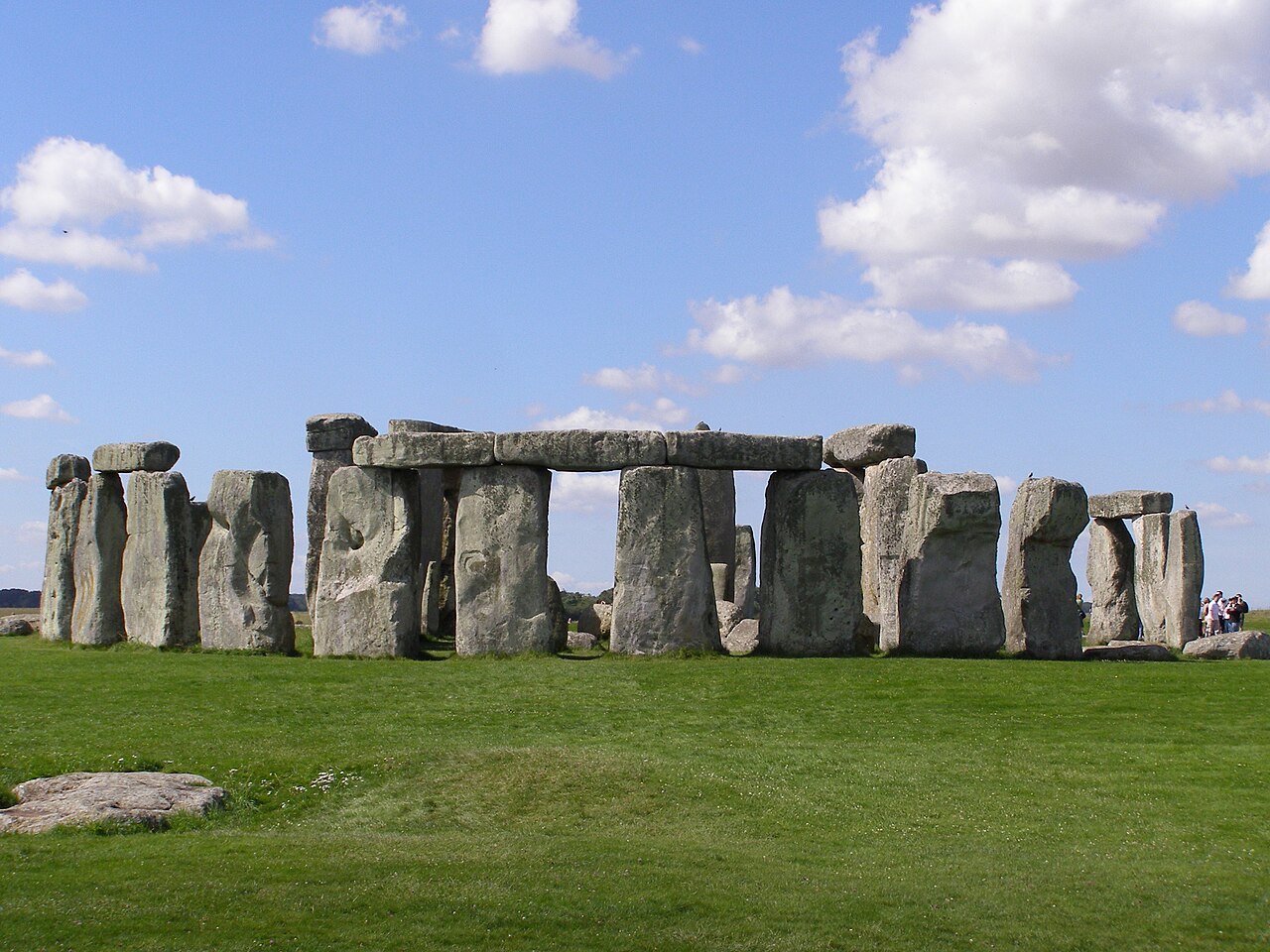
Nestled amidst the vast expanse of Salisbury Plain in southern England, Stonehenge stands as one of the world's most enigmatic and awe-inspiring archaeological sites. This colossal megalithic stone circle has captivated humanity for millennia, inspiring countless theories, legends, and intense scholarly debate. For those fascinated by stonehenge salisbury history, its silent stones whisper tales of ancient Britons, ingenious engineering, and purposes lost to the mists of time.
Dating back approximately 4,600 years, this UNESCO World Heritage site was meticulously constructed by a Neolithic civilization that left no written records, leaving us to piece together its secrets from the monumental evidence they left behind. The ongoing efforts to understand who built Stonehenge and, more importantly, why, form a compelling narrative that blends cutting-edge archaeology with imaginative conjecture. Each stone, each alignment, and each buried artifact contributes to a grand, unfolding puzzle that continues to challenge modern minds.
Legends and Theories: From Arthurian Magic to Cosmic Visitors
The profound mystery surrounding Stonehenge has naturally spawned a rich tapestry of tales, both ancient and modern, attempting to explain its existence. Long before scientific inquiry took hold, folklore provided vivid explanations:
- Merlin's Magic: Perhaps the most famous legend credits Merlin, the legendary wizard of Arthurian lore, with Stonehenge's creation. The tale suggests Merlin magically transported the colossal stones from Ireland, a testament to the sheer impossibility early people perceived in its construction.
- Danish Invaders: Other ancient narratives posited that invading Danes were responsible, or even that it was the ruin of a long-lost Roman temple, reflecting a desire to attribute such an monumental feat to known, powerful civilizations.
Modern interpretations are no less imaginative, demonstrating humanity's enduring fascination with the unexplained:
- Extraterrestrial Landing Site: Some contemporary theories boldly suggest Stonehenge could be a landing area or navigational beacon for alien spacecraft, a notion often fueled by its precise astronomical alignments.
- Giant Fertility Symbol: Another radical, though less widespread, theory interprets the monument as a giant fertility symbol, echoing ancient connections between monumental structures and life-giving forces.
These diverse theories, from the mystical to the outlandish, highlight our innate desire to fill the void of knowledge with compelling narratives. While many are quickly dismissed by rigorous archaeological investigation, they serve to underscore the profound impact Stonehenge has had on the human imagination throughout stonehenge salisbury history.
The Astonishing Feat of Neolithic Engineering
Unraveling how Stonehenge was built without modern machinery, or even the wheel, remains one of its greatest puzzles. Centuries of fieldwork, dating back to initial surveys in the 1660s, have painted a remarkable picture of Neolithic ingenuity and sheer perseverance.
The construction of Stonehenge was not a single event but a monumental undertaking spanning an estimated 1,500 years. It began around 3000 B.C. with a complicated pattern of wooden posts, which were later replaced and refined over successive phases. The most iconic phase, around 2600 B.C., saw the introduction of the massive stone elements we recognize today.
The stones themselves came from surprisingly distant locations, showcasing an incredible logistical effort:
- The Bluestones: Approximately 80 smaller bluestones, made of dolerite, form the inner rings. These stones were traced all the way to the Preseli Hills in West Wales, a staggering journey of roughly 145 to 200 miles (230-320 kilometers). The sheer effort of floating, dragging, and hauling these stones across varied terrain is almost incomprehensible.
- The Sarsen Stones: The larger, iconic sandstone blocks that form the continuous outer circle and the impressive trilithons (pairs of standing stones with a lintel on top) were transported from local quarries, around 19 miles (30 kilometers) away. Each of these immense blocks weighs an average of 25 tons.
- The Altar Stone: The largest non-sarsen stone, known as the Altar Stone, has been traced by some researchers to Scotland, an astonishing 466 miles (750 kilometers) away, although this theory remains hotly debated.
It's estimated that the entire construction process required well over 20 million hours of labor, involving thousands of people moving these gargantuan stones using only ropes, sledges, timber rollers, and immense collective strength. The precision with which these stones were then erected and capped with lintels, often employing sophisticated jointing techniques, is a testament to an advanced understanding of engineering for its time. To delve deeper into this incredible feat, read our article How Was Stonehenge Built? The Epic Journey of Stones & Builders.
What was Stonehenge For? Rituals, Observatories, or Healing Temples?
The question of Stonehenge's ultimate purpose is perhaps its most compelling and enduring mystery. Modern debate typically falls into two main camps, though these are not mutually exclusive:
- A Sacred Ceremonial Site: Many scholars believe Stonehenge was primarily a holy place for ancient rituals, deeply connected to the natural world. Proponents point to its undeniable celestial alignments, particularly with the rising and setting sun at the summer and winter solstices. These alignments suggest a profound link to the changing seasons, possibly facilitating ceremonies or festivals marking significant moments in the agricultural calendar or cycles of life and death.
- A Scientific Observatory: Alternatively, others view Stonehenge as a sophisticated prehistoric observatory. Beyond the solstices, alignments with specific stars and the moon's complex cycles suggest it could have served as a megalithic calendar. This could have been used for tracking dates, predicting astronomical events like eclipses, or simply understanding the cosmos to guide societal activities.
However, more radical and equally compelling theories have emerged:
- A Prehistoric Healing Centre: A fascinating theory proposes Stonehenge functioned as a "prehistoric Lourdes," a place of healing and pilgrimage. This idea largely revolves around the smaller bluestones, which researchers argue must have been credited with magical or curative powers to warrant their arduous journey from West Wales. Excavations co-directed by Timothy Darvill in 2008 unearthed Bronze Age skeletons in the area showing signs of bone deformities, lending credence to the idea that people, possibly seeking remedies, traveled great distances to the site. The perceived therapeutic properties of the bluestones could have drawn the ailing from across ancient Britain.
- A Burial Ground: While its primary purpose is still debated, modern scholars largely agree that Stonehenge also served as a significant burial ground. Excavations have revealed numerous human remains, particularly cremated remains dating from the earliest phases of the monument's use. This adds another layer of complexity to its function, suggesting it was a place of reverence for ancestors as well as a living ceremonial site.
The truth likely lies in a combination of these theories. Stonehenge was probably a multifaceted site, evolving in its purpose over its long history, serving as a spiritual center, an astronomical calendar, a healing place, and a revered burial ground, all interwoven into the fabric of Neolithic life. For a deeper dive into these complex theories and the ongoing quest for answers, explore Stonehenge: Unraveling 4,600 Years of Mystery on Salisbury Plain.
Visiting Stonehenge Today: A Window to the Past
Today, Stonehenge continues to inspire and educate, attracting nearly a million visitors annually from across the globe. Managed by English Heritage, it offers a powerful connection to our prehistoric past. While you cannot walk among the stones as freely as in centuries past, the visitor experience provides excellent vantage points, detailed exhibitions, and a deeper understanding of its colossal significance.
Practical Tip: To truly appreciate the scale and mystery, consider visiting during the solstices (summer or winter) when special access is sometimes granted, though this often involves navigating large crowds. Booking tickets in advance is highly recommended, especially during peak seasons.
Conclusion: The Enduring Enigma of Stonehenge
From ancient rituals to far-fetched alien theories, the secrets of Stonehenge continue to captivate and challenge us. This remarkable testament to human ingenuity and communal effort on Salisbury Plain stands as a powerful symbol of our ancestors' complex beliefs, astronomical knowledge, and engineering prowess. As archaeologists continue their painstaking work, leveraging new technologies and insights, more chapters of stonehenge salisbury history are slowly being unveiled. Yet, the core mystery persists, ensuring that this magnificent stone circle will remain one of the world's most pondered and inspiring archaeological sites for generations to come, forever inviting us to gaze upon its silent sentinels and wonder.